what we offer
Ballet Classes For ages 3 to 18
dance Programs
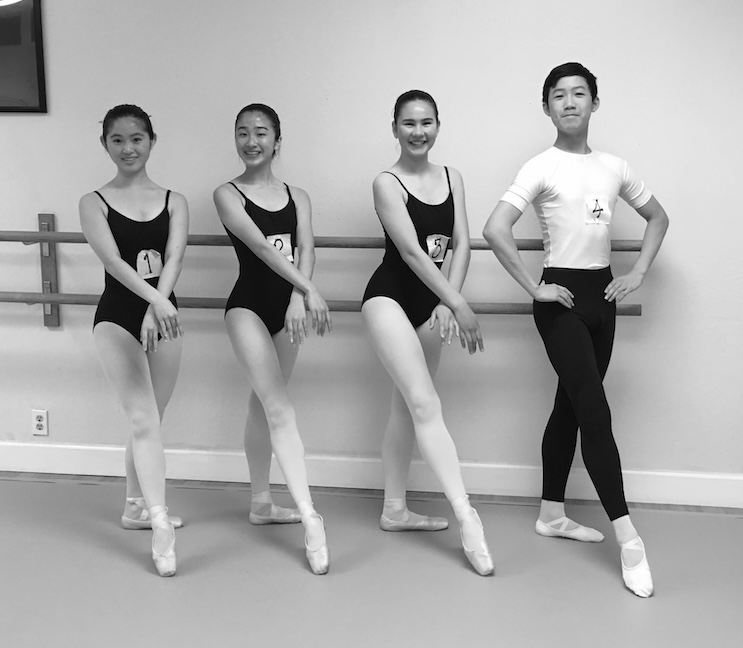
Classes following the internationally recognized RAD Syllabus
Our dance classes are developmentally-based and build on progression. We offer sound fundamentals and a holistic approach to facilitate proper and well-rounded dance training.
Each year, our students participate in Royal Academy of Dance Exams, which provide a benchmark and standard for proper ballet training.
Jump to:
our Programs
Quality dance classes for students of all ages
From our youngest pre-school dancer to our aspiring teen ballerina, we strive to provide a quality and caring school that will help your dancer achieve their dreams!
class descriptions
Children’s Classes
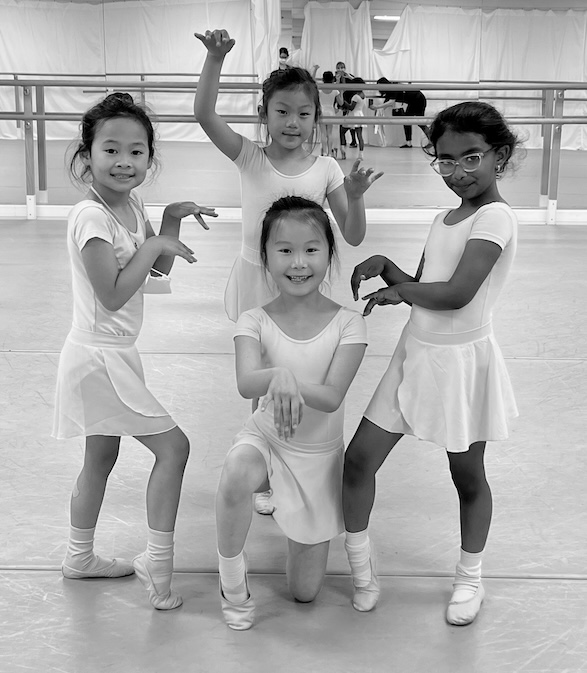
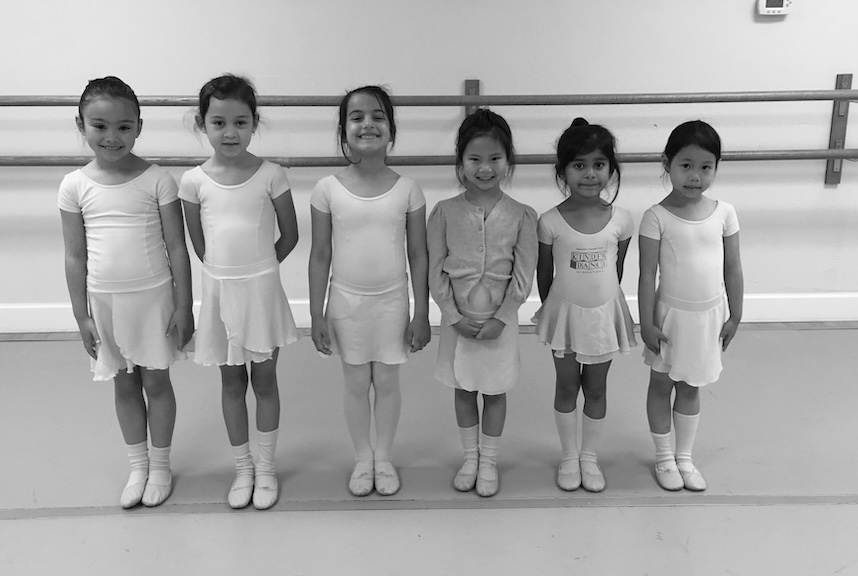
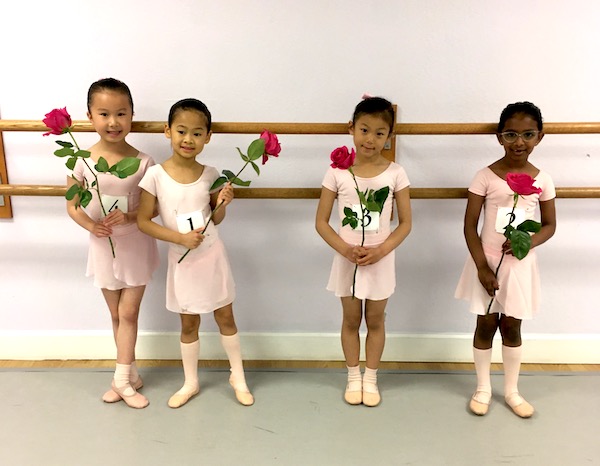
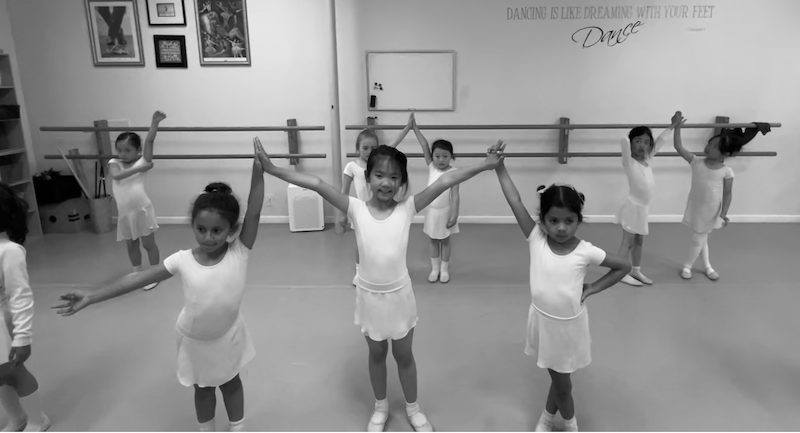
Developmentally-based ballet curriculum for young girls and boys ages 3 and up
(Ages 3 – 6 years old. Levels are based on maturity and ability to focus)
DTL1 / DTL 2 – One day per week (60 min class)
The Dance to Your Own Tune level (DTL) curriculum was developed to help young children become more aware of their body and an understanding of how it moves through space. It teaches increased self-control, coordination, and confidence while helping children to become more sensitive to music through movement and as a means of self-expression in response to music. Children who are toilet-trained and can be away from their parents for an hour class will enjoy exploring dance movement with music.
Placement in class levels is based on maturity and ability to focus, not age. It is not uncommon for young children to benefit from Dance to Your Own Tune for 2 or more years (minimum age 3 by August 1 to join).
Each lesson follows a theme that children can relate to and works to incorporate the learning components mentioned above by having children respond to teacher-prompted movements or by collaborating with the teacher to respond creatively to music.
EXAMPLES of Monthly Themes:
- July/August……………. Parade Day
- September …….. Woodland Friends
- October……………………. Farm Fun
- November ……………… Jungle Jam
- December………………….. Toyland
- January…….. The Enchanted Castle
- February…………….. Camping Trip
- March…………. Come to the Circus
- April………………….. Bunny Hollow
- May……………… Spring Showcase
- June……….. A Day at the Seashore
(Approximately 5 – 8 years old)
PP / P – Two days per week (60 minute class each).
The Pre-Primary and Primary dance syllabus was developed to help children learn critical thinking, self-confidence, and social-emotional skills through a dance course that is artistically and developmentally appropriate for their age and appealing to young children.
Placement in class levels is based on maturity and ability to focus, not age. However, the minimum age for entering Pre-Primary is 5 years old prior to Sept. 1 (with teacher recommendation).
The aims of the syllabus are to improve motor development by helping children to become more skillful in natural dance movements, improving their physical fitness, and promoting self-expression through movement. Cognitive development is fostered through learning movements, developing creative skills, and learning musicality and sensitivity in response to music. Self-esteem and self-confidence are also developed in an environment that enables children to become independent and co-operative learners. The program encourages creativity by engaging the students in planning exercises set to musical pieces and to express emotion through story telling. By making children feel good about what they are doing, we help to nurture a good self-esteem.

Ballet Grades
Royal Academy ballet levels for elementary and middle school students
(Approximately 7-10 years old)
G1 / G2 – Two days per week (75 minute class), plus 30 additional minutes of Stretch/Strength.
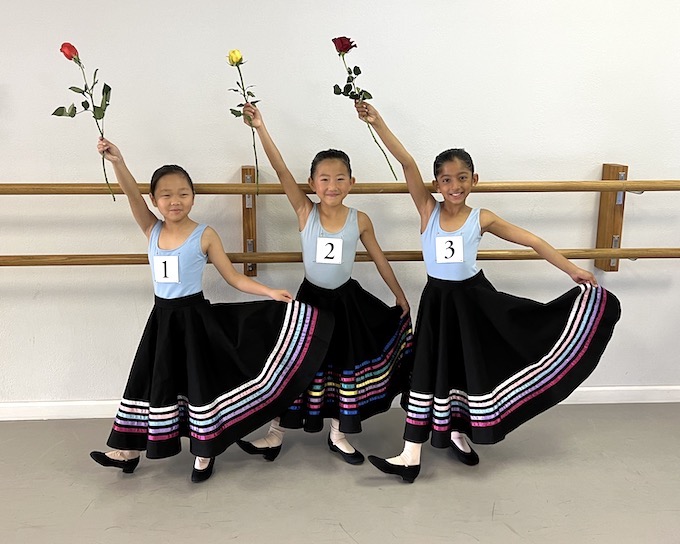
In Grades one and two, students will progress into a more formalized study of classical ballet. They will begin work at the barre, strengthen stance and age appropriate use of turnout, port de bras, articulated use of feet and classical line.
Placement in class levels is based on maturity, ability to focus, and dance experience, not age. The RAD levels do not coincide with the grade levels in elementary school.
Character work is added in these grades, as seen in all of the classic ballets. Creative imagery is used in classwork to help children learn control and also different dynamics of movement. Musicality and performance quality are layered in to encourage children to dance as a performing art. Older beginners are placed in these levels to ensure they get the basics of classical technique.
(Approximately age 9 and up)
G3 / G4 / G5 – Three days per week (90 minute classes), plus 30 minutes of Stretch/Strength.
Starting in Grades three and four, students will now attend three classes per week. This is to keep up with demands of progressing in all foundational areas learned in Grades one and two, as well as an increasing vocabulary of ballet steps. In some cases, students may need to spend extra time in these levels, as the bodies and brains of children develop at individual rates. More focus is required to retain technical corrections and also more complicated choreography in both exam syllabus and free class work in these levels. Character work is continued in Grades three and four at a higher level.
Grade five is the culmination of the RAD Graded Syllabus. Increased strength, flexibility, proper use of turnout, correct line, rhythmical character work as well as a maturing sense of performance and musicality are all required for Grade five. The exam syllabus has intricate choreography to challenge the dancers, requiring a mature approach and focus.
By the end of grade five, students should be ready to embark on the Vocational (pre-professional) syllabus of the RAD, or they may choose to follow a more recreational path and continue study of the Discovering Repertoire Syllabus. Which path they chose is dependent on their own innate physical ability, as well as the work ethic and application of correction in class.

Vocational Levels
Solid ballet and pointe training for dedicated middle and high school students
(Minimum age is 11 to begin this track)
- Recreational/Discovering Repertoire Syllabus (DR) – (3 technique classes/week)
- Vocational Track – Intermediate Foundation (IF) & Intermediate (INT) – (4 technique classes/week, including pointe)
- Private/semi-private lessons as needed by invitation/arrangement
* Placement in levels, and placement en pointe is at the discretion of faculty, as is entry for RAD examinations.
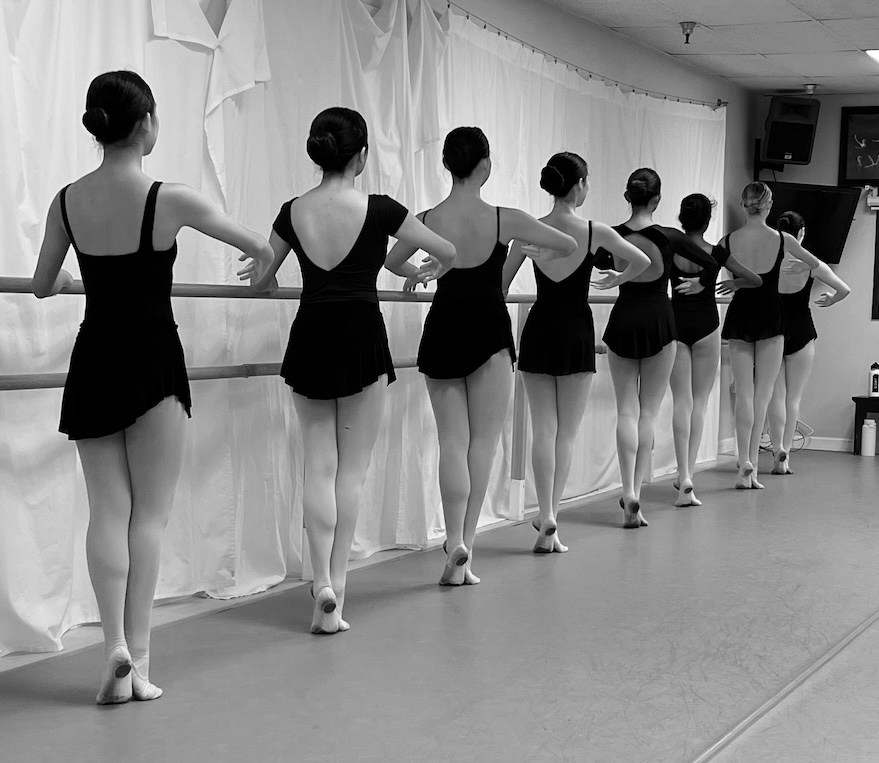
We offer Discovering Repertoire for recreational dancers, as well as Intermediate Level training for dancers who are serious about learning ballet technique. Students continue their RAD examinations in the Vocational (pre-professional) Syllabus, which includes pointe work for female students. They also take classes with former professional dancers and teachers with varied backgrounds such as Vaganova technique to broaden their range of vocabulary, approach and style.
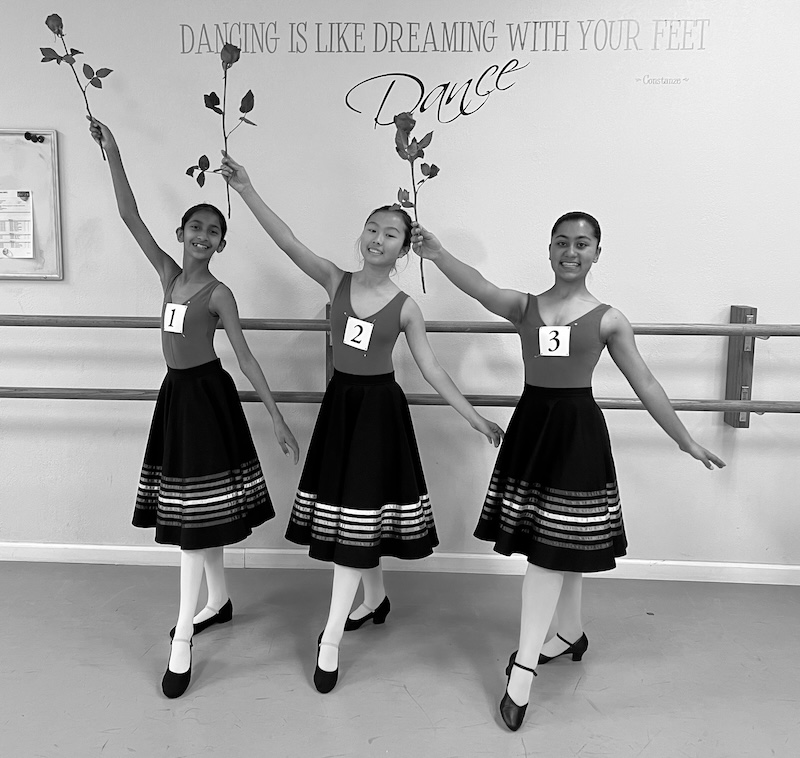
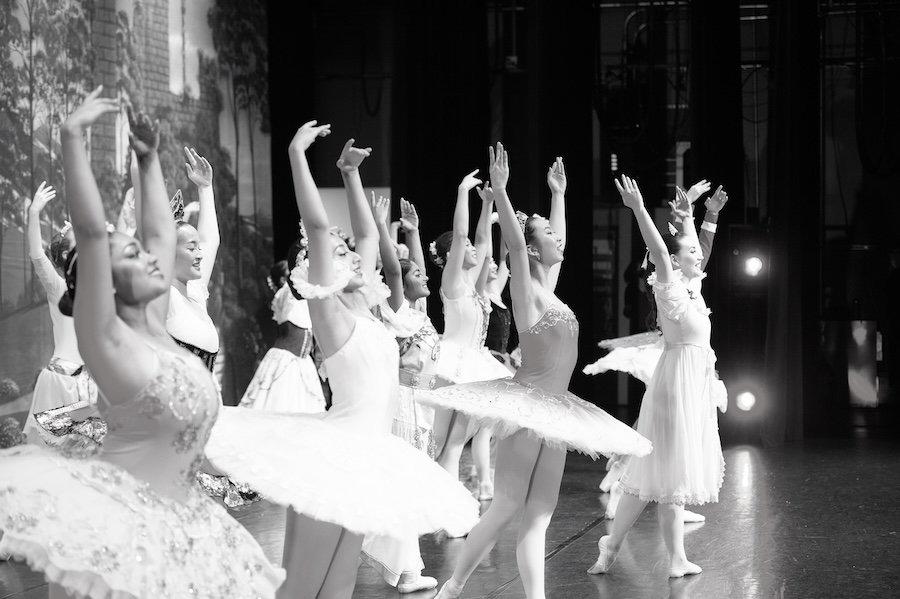
Qualified and dedicated students at the intermediate and advanced levels have opportunities to perform in solos and small ensembles in our annual Nutcracker Ballet and Spring Showcase, as well as compete locally and nationally as part of our invited Pre-Professional Dance Company (PPDC).
- Vocational Track – Advanced Foundation (AF), Advanced (A1, A2), and Solo Seal (SS)
- 4 + technique classes/week including pointe
- Additional classes in Contemporary, Jazz, or Acro are required
- Private/semi-private lessons as needed by invitation/arrangement
* Placement in levels, and placement en pointe is at the discretion of faculty, as is entry for RAD examinations.
Students studying at the highest level can work towards college dance programs and careers in professional dance or teaching. Students who don’t plan to pursue dance beyond high school still gain a tremendous amount of benefit from studying dance at this level. The focus and discipline of dance, as well as the camaraderie and teamwork of performing carries into all aspects of their future lives.
A few of our students have had the honor or participating in the Solo Seal examination. This exam may only be attempted by students who gain their RAD Advanced 2 with Distinction. It is estimated that less than 1% of RAD students in over 70 countries worldwide who take their RAD exams reach this level. To pass Solo Seal the dancer must score at least 80 points.
Qualified and dedicated students at the intermediate and advanced levels have opportunities to perform in solos and small ensembles in our annual Nutcracker Ballet and Spring Showcase, as well as compete locally and nationally as part of our invited Pre-Professional Dance Company (PPDC).

Stretch & Conditioning
Supplemental training for dancers in Grade 1 through Grade 5
Grades 1-3
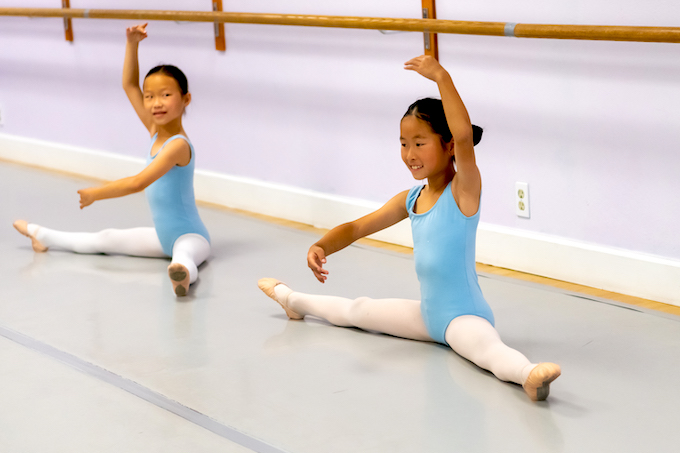
Students participate in a variety of stretching and strengthening exercises to promote stamina, flexibility and core strength. Instructors use techniques from Yoga, Pilates, Calisthenics and Progressing Ballet Technique (PBT) to help increase body awareness and fine muscle coordination as well as mind-body connection.
Grades 3 and up: Pre-pointe (by teacher recommendation)
Pre-pointe is a program that incorporates The Perfect Pointe System created by internationally renowned Dance Physiotherapist Lisa Howell from Australia. Students will focus on strength, control and flexibility in the feet and all of the key areas of the body that are needed to safely proceed to pointe work. Attention will also be drawn to how they use their turnout, foot articulation and correct stance (core strength) in their technique classes- which relates directly to eligibility for pointe work. Work outside of class will be needed to gain the necessary strength and flexibility for pointe. A focused and mature approach is as essential as physical attributes.
Before and after the completion of the phases in Lisa Howell’s program, students will be individually assessed. Some may require more time than others, as bodies and minds develop at different rates. The students must be able to consistently use correct technique in their classwork before progressing to pointe. The minimum age for pointe work is eleven years old due to ossification in the bones of the feet, but there are many other factors that contribute. Instructors at Rachel’s Ballet take the safety of the students as the first consideration when assessing pointe readiness. Students use a companion book https://www.dancesupplies.com/The-Perfect-Pointe-Book.html with the program.
Progressing Ballet Technique (PBT) is an innovative body-conditioning and strengthening program developed by Marie Walton-Mahon for students to understand the depth of training muscle memory in achieving their personal best. One of the important elements used in the PBT method is muscle memory which helps to improve students’ understanding of core stability, weight placement and alignment. Each exercise in the PBT program has been developed with care and guidance by Marie Walton-Mahon alongwith a team of physiotherapists.
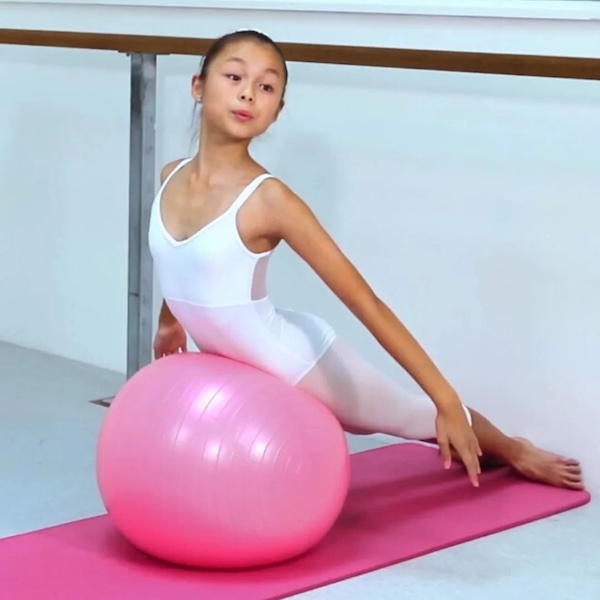
For safety reasons it is very important that all our students have their own equipment to take the class, and in addition to be able to practice at home.
This is the equipment that all students should have for the class:
1. “Swiss Ball ‘or’ Fit Ball ‘See the recommended size by clicking the button
2. Soft Stability Ball or Pilates Soft Ball
3. Resistance Band
4. Lacrosse Ball
5. Yoga mat

Other Disciplines
Additional dance styles offered for well-rounded ballet training
Lyrical: Lyrical dance is a dance style that blends ballet and jazz dance. Lyrical dancers use movement to express strong emotions through their dancing, and often dances to music with a story. Movements in lyrical dance are characterized by fluidity and grace, with the dancer flowing seamlessly from one move to another. A lyrical routine will showcase a dancer’s strength, musicality, emotion and resistance.
Jazz: Jazz dance is fun and energetic, consisting of unique moves, footwork, leaps and turns. To excel in jazz, dancers need a strong background in ballet, as it encourages grace and balance. A separate form of technique is developed in Jazz, and this will be introduced and instructed through an extensive warm up, across the floor and continued through to a choreographed jazz routine.
Contemporary: This style of dance is a combination of modern + jazz+ lyrical + ballet + acro. It involves both fluid and strong movements that express new aspects of dance with improvisation techniques and creative practice.
Students who are only enrolled in Jazz/Lyrical/Contemporary for our Fall/Spring School Year will perform in our Annual Showcase. There is no RAD examination or Nutcracker performance.
Acro (or acrobatic arts) is gymnastic fundamentals for dancers. Acro is designed to promote excellence in flexibility, strength, balance, limbering, tumbling, basic contortion, and partner/group stunting for dancers. Learning acro will improve the overall technique of a dancer in all genres, and will move your dancer one step closer to perfecting their technique in their passion. Danielle’s Acro is offered to students from Primary to Grade 5.

Competition teams
By invitation only; group and solo competition experiences
Junior Competition Team (JCT) – Typically Grades 1-5
Our JCT is by invitation only and based upon staff recommendations. Consideration is given to a student’s Royal Academy of Dance (RAD) Exam scores, performances, attitude, teamwork spirit, passion and desire to excel in dance.
Students will perform dances in Classical and Contemporary groups choreographed by our faculty and guest artists at competitions (at the instructor’s discretion) and our Annual Showcases. Students who are invited to join will be given a contract specifying a set of rules and are expected to follow those rules if they accept the invitation.
Find more information about Junior Competition Team on our webpage.
Pre-professional Dance Company (PPDC) – Typically Vocational Level Dancers
Our PPDC is by invitation only and based upon staff recommendations. Consideration is given to a student’s Royal Academy of Dance (RAD) Exam scores, performances, attitude, teamwork spirit, passion and desire to excel in dance.
Students will perform dances in Classical and Contemporary groups choreographed by our faculty and guest artists at competitions (at the instructor’s discretion) and our Annual Showcases.
Selected students may also be invited to compete as soloists in classical ballet variations. Teachers may also set choreography in ballet, Neo-classical or contemporary styles.
Students who are invited to join will be given a contract specifying a set of rules and are expected to follow those rules if they accept the invitation.
Find more information about the Pre-Professional Dance Company on our webpage.
Register & Find Classes
How to Register:
Info for enrolled students:
Summer DANCE CAMPS
Our 2026 Summer Dance TBA early spring
We encourage our students to stay active with supplemental summer dance programs and complimentary sports to keep up their coordination, flexibility and strength, as well as to experience other art forms.
- Nutcracker Camp – G4 to Vocational
- Summer Dance Camp – ages 7-10
- Mini Summer Dance Camp – ages 5-7